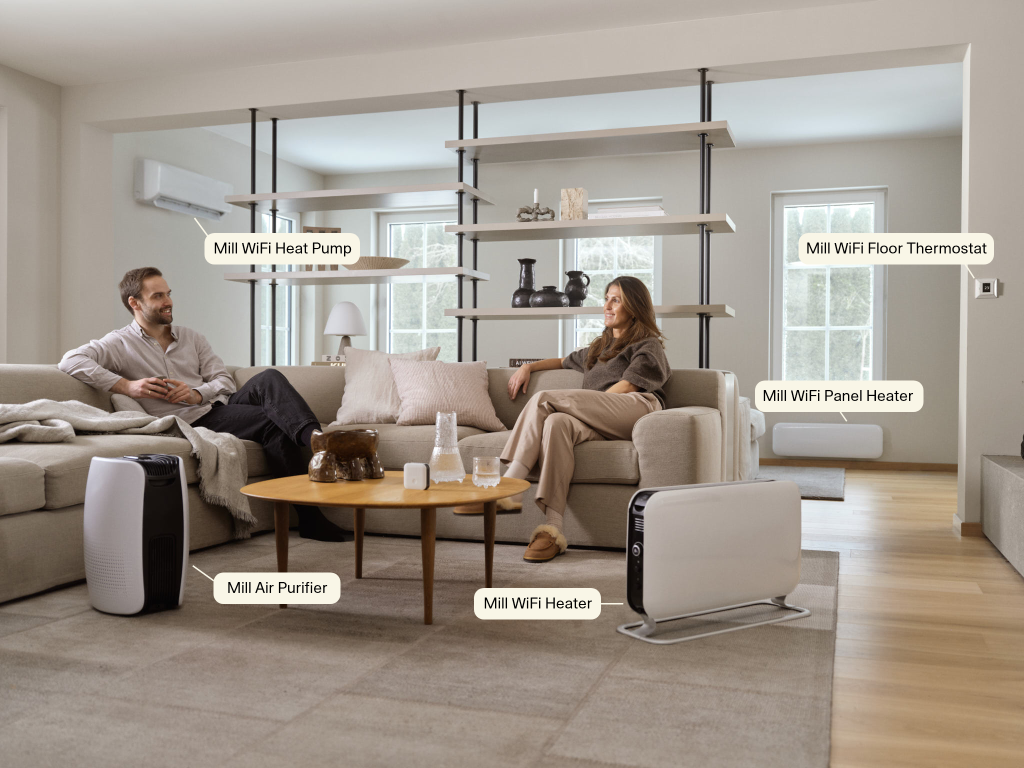
Heat pumps are generally the most energy-efficient option for heating larger areas, while smart electric space heaters provide flexible, room-by-room temperature control. Combining a heat pump with smart electric heaters can be a practical solution for homes where certain rooms need additional warmth.
Electric space heaters come in several types, including panel heaters, portable convection heaters, fan heaters and oil-filled radiators. Each has different advantages depending on your heating needs.
Which type of electric heater should you choose?
|
Heater type |
Best suited for |
Main advantage |
|
Smart WiFi panel heater |
Bedrooms, living rooms, home offices and everyday heating |
Wall-mounted, silent and precise temperature control |
|
Smart WiFi portable heater |
Rooms where heating-needs changes |
Portable, silent and app-controlled |
|
Portable heater without WiFi |
Occasional supplementary heating |
Flexible placement and simple operation |
|
Fan heater |
Quick heating of cold spots |
Fast, fan-assisted heat distribution |
|
Oil-filled radiator |
Bedrooms, living rooms and extended heating periods |
Silent, gentle and consistent warmth |
|
Heat pump |
Larger living areas and whole-home heating |
High heating efficiency and lower electricity consumption per unit of heat |
1. Smart WiFi panel heaters – for everyday room heating
Smart WiFi panel heaters are ideal for maintaining a comfortable temperature in individual rooms throughout the day.
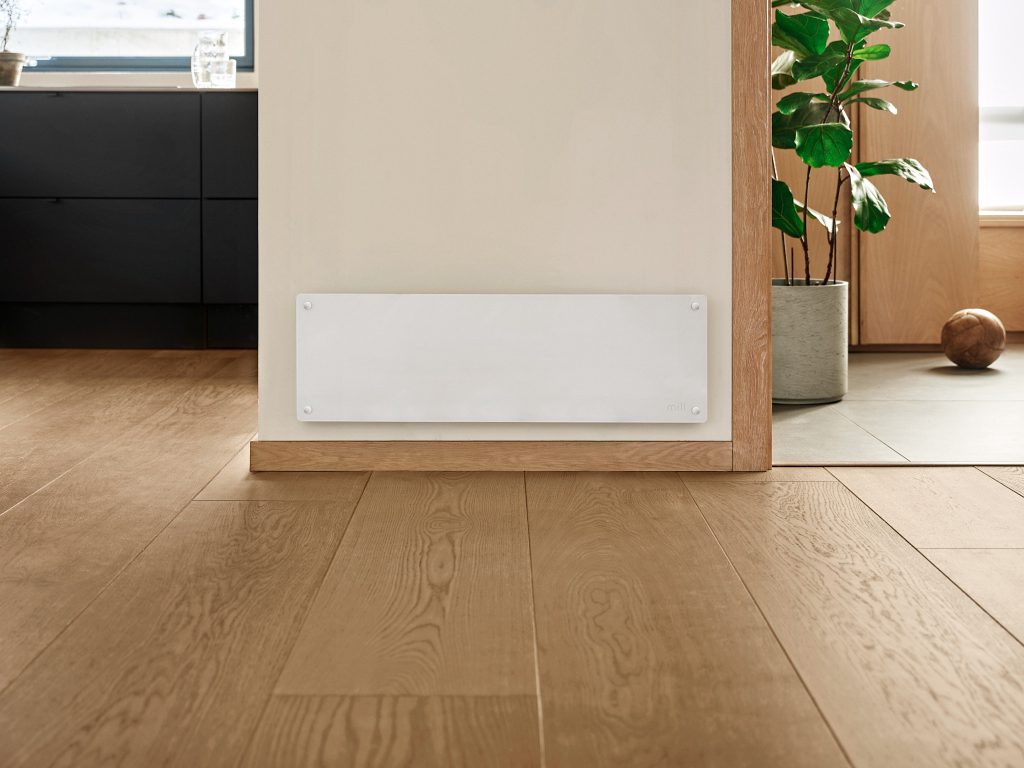
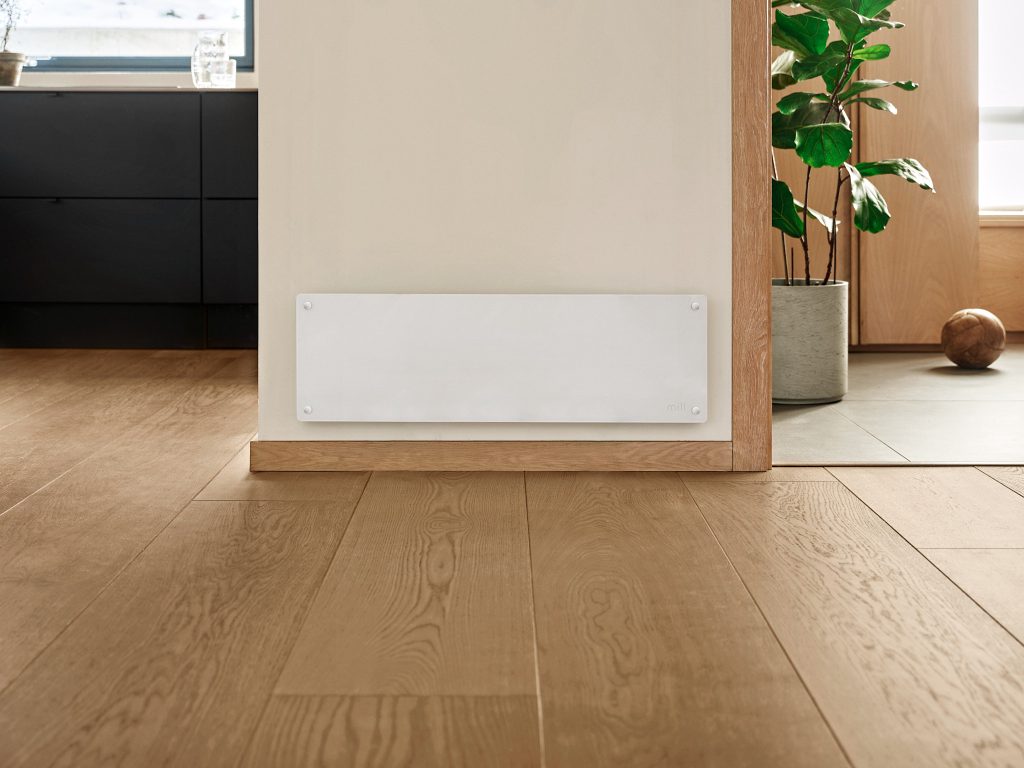
Wall-mounted panel heaters save floor space and provide silent, convection-based heating. Mill Smart WiFi panel heaters can be controlled remotely through the Mill app, allowing you to set temperatures, create weekly heating schedules and monitor electricity consumption.
Best for: Bedrooms, home offices, living rooms and bathrooms when using an appropriately rated model.
Key benefits:
- Wall-mounted design with no floor space required.
- Silent operation and precise temperature control.
- Automatic schedules and remote control through the Mill app.
- Suitable for continuous heating when installed and used according to the manufacturer’s instructions.
Mill Smart WiFi heaters also feature technologies such as Mill PID Wattage Tech™ and Mill Predictive Heating™, depending on the model. These help maintain stable temperatures and ensure rooms reach the desired temperature at scheduled times.

2. Smart WiFi portable heaters – for flexible heating
A smart WiFi portable heater offers similar temperature control to a smart panel heater but can be moved between rooms.
Mill Smart WiFi portable heaters use convection heating to distribute warmth throughout the room. They are particularly useful when you need supplementary heating in different areas of your home.
Best for: Home offices, guest rooms, hobby rooms and other spaces where heating needs change.
Key benefits:
- Portable design with no wall mounting required.
- Silent convection heating.
- Smart temperature schedules and remote app control.
- Easy to move between suitable rooms.
Choose a portable WiFi heater if you want smart heating without installing a permanent wall-mounted unit.

3. Portable heaters without WiFi – for occasional extra warmth
Portable convection heaters without WiFi provide a simple way to add warmth to a room without using an app.
They are useful when you need additional heating for limited periods, such as during particularly cold days.
Best for: Occasional heating in home offices, living rooms or guest rooms.
Key benefits:
- Simple operation without WiFi.
- Flexible placement.
- Silent heating without a fan.
Unlike smart WiFi models, these heaters offer fewer options for automated temperature scheduling and remote energy management.
Always follow the product’s safety instructions, including requirements for supervision and placement.

4. Fan heaters – for fast, targeted heating
Fan heaters use an electric heating element and a built-in fan to distribute warm air quickly.
Mill fan heaters are compact and designed for situations where additional warmth is needed immediately.
Best for: Short heating sessions, temporary cold spots and rooms requiring quick supplementary warmth.
Key benefits:
- Fast, fan-assisted heat distribution.
- Compact design, making storage easy.
- Portable and convenient for occasional use.
Fan heaters generally produce more noise than convection heaters or oil-filled radiators because of their built-in fan.
They are best suited to temporary supplementary heating rather than silent, continuous room heating.

5. Oil-filled radiators – for gentle, silent warmth
Oil-filled radiators use electricity to heat oil inside a sealed radiator. The heated oil transfers warmth to the radiator’s surface, which then heats the surrounding room.
Mill Gentle Air oil-filled radiators provide silent, steady heating and are suitable for rooms where consistent comfort is important.
Best for: Bedrooms, living rooms and home offices.
Key benefits:
- Completely silent operation.
- Consistent warmth and gradual heat distribution.
- Suitable for extended heating periods when used according to product instructions.
- Available with WiFi control on selected models.
Mill Gentle Air radiators feature Mill Heat Boost Technology™, which distributes heat faster than conventional oil-filled radiators, with up to 29% faster room heating under its stated comparison conditions.
Oil-filled radiators typically respond more slowly to temperature adjustments than fan heaters, making scheduled heating particularly useful.

6. Heat pumps – for energy-efficient central heating
Heat pumps use electricity to transfer heat from outdoor air, the ground or water into your home.
Unlike conventional electric resistance heaters, which convert approximately 1 kWh of electricity into 1 kWh of heat, a heat pump can typically deliver around 3–5 kWh of heat for every 1 kWh of electricity consumed under suitable operating conditions.
Actual performance varies depending on outdoor temperature, heat pump type and installation.
Best for: Heating larger living areas or providing the main heating source for a home.
Key benefits:
- Lower electricity consumption per unit of delivered heat.
- Suitable for regular heating of larger areas.
- Can reduce heating costs compared with direct electric heating.
Heat pumps generally require a higher initial investment and professional installation. Air-to-air models may also struggle to maintain an even temperature in separate rooms with closed doors.
For this reason, smart electric panel heaters can be a useful supplement in bedrooms, bathrooms and other rooms that need independent temperature control.

How much wattage do you need for your room?
For electric space heaters, 70–100 watts per m² is a useful starting estimate, depending on insulation, ceiling height and outdoor temperatures.
|
Room size |
Estimated heating power |
|
5 m² |
350–500W |
|
10 m² |
700–1,000W |
|
15 m² |
1,050–1,500W |
|
20 m² |
1,400–2,000W |
|
25 m² |
1,750–2,500W |
These are general estimates rather than exact sizing requirements. For larger rooms, using two appropriately sized heaters can provide more even heat distribution than a single heater.
Placing a panel heater beneath a window can also help counteract cold downdraughts, provided the manufacturer’s installation requirements are followed.
Can smart WiFi electric heaters reduce electricity consumption?
Yes. Smart WiFi electric heaters can reduce unnecessary energy consumption through precise temperature control, heating schedules and remote management.
While conventional electric resistance heaters convert approximately the same amount of electricity into heat, smart heaters can reduce how much heating is needed.
Independent simulations conducted in collaboration with the Norwegian University of Science and Technology (NTNU) indicate that Mill Smart WiFi heaters can reduce heating energy consumption by up to 30%, depending on how they are used and the comparison conditions.
Depending on operating conditions and heating requirements, heating with a Mill Smart WiFi heater can require as little as 5 kWh per m² per month under documented conditions.*
The Mill app also allows users to monitor energy consumption and adjust heating schedules to avoid unnecessary heating.
Conclusion: Choose heating based on your needs
The best electric heating solution depends on where and how frequently you need warmth.
For everyday room heating, smart WiFi panel heaters offer a practical combination of comfort, silent operation and energy control. Portable heaters and fan heaters are useful for occasional supplementary heating, while oil-filled radiators provide gentle, consistent warmth.
For larger areas, a heat pump is generally the most energy-efficient option. Combining a heat pump with Mill Smart WiFi electric heaters provides efficient heating in main living areas alongside independent temperature control in individual rooms.
*The 5 kWh/m² figure is based on documented conditions. Actual energy consumption depends on the heating period, room characteristics, insulation, climate and usage.
Source: https://millnorway.com/heating-efficiency-test/